








Episodes

Nov 25, 2025
Nov 25, 2025
1 hr 1 min
Beth Gibson, Founder & Executive Director of Buddy Up for Life/Buddy Up Tennis, founded Buddy Up for Life in 2008 when her then 3 ½-year-old son, Will, who has Down syndrome, wanted to play tennis with his older brother. Beth realized there was a void in fitness programs for people with Down syndrome. And took the initiative to make her son’s dreams a reality, holding the first Buddy Up Tennis Clinic in December 2008 in Columbus, Ohio. Since then, the organization has expanded to 15 programs across three pillars (health & wellness, education, and friendship), with tennis as a cornerstone that has seen exponential growth nationwide. Buddy Up Tennis is now a weekly, high-energy adaptive tennis program for athletes ages 5 and up where volunteer buddies are partnered with athletes to provide support, develop friendships, and have fun while playing tennis. The program is now nationally recognized as the leader in impacting the lives of individuals with Down syndrome and Buddy Up for Life currently has 850 athletes, 1,400 buddies, 130 coaches and instructors and 42 chapters nationwide, a number that continues to grow. Beth continues to lead Buddy Up for Life, with her son, Will, now a college student. She has made it her life’s mission to embrace what it means to live with Down syndrome and help participants live a life that redefines expectations and breaks traditional boundaries.
Learn more at their Website and Instagram.
Episodes on YouTube: https://www.youtube.com/playlist?list=PLi4R9dL4avnOh5T8VEejTmDL15gKp2i_u
Episode Transcript: https://ifweknewthen701833686.wordpress.com/2025/11/25/196-buddy-up-for-life-with-beth-gibson/2/
Please follow us on X @ifweknewthenPOD, you can drop us a line on our Facebook page @ifweknewthenPOD or visit our website https://www.IfWeKnewThen.com to send us an email with questions and comments. Also join our mailing list there and get alerts of future podcast episodes. Thank you again and we look forward to you joining us on the next episode of IF WE KNEW THEN.

Nov 10, 2025
Nov 10, 2025
1 hr 1 min
Here is another beautiful conversation we had with Dr. Vaish Sarathy and her son, poet Sid Ghosh who has published a book of poetry titled Yellow Flower Fills Me Whole. Sid has a duel diagnosis of Autism and Down syndrome and previously appeared on the podcast, with Vaish, to discuss non-linear education and how he communicates using a letter board.
Sid’s poetry book is available through Amazon or at this Milkweed link: https://milkweed.org/book/yellow-flower-gills-me-whole
Episode Transcript: https://ifweknewthen701833686.wordpress.com/2025/11/10/195-yellow-flower-gills-me-whole-poetry-by-sid-ghosh/2/
Please follow us on X @ifweknewthenPOD, you can drop us a line on our Facebook page @ifweknewthenPOD or visit our website https://www.IfWeKnewThen.com to send us an email with questions and comments. Also join our mailing list there and get alerts of future podcast episodes. Thank you again and we look forward to you joining us on the next episode of IF WE KNEW THEN.
--------
Summary:
Episode 195 of the IF WE KNEW THEN podcast features a powerful and deeply reflective conversation with poet Sid Ghosh and his mother, Dr. Vaish Sarathy. Centered around Sid’s newly released poetry collection 'Yellow Flower Gills Me Whole', our discussion explores communication, identity, disability and the transformative power of expression.
Sid, an 18-year-old with Down syndrome and autism, communicates using a letterboard, spelling out his thoughts with intention and precision. We make a point to highlight how essential it is to witness this process visually, as it reveals not only how Sid communicates but also the depth and complexity of his thinking. What emerges quickly is that Sid does not experience language in conventional ways. He explains that he “thinks in poetry” because typical speech is difficult for him. This insight reframes assumptions about communication and intelligence, illustrating that expressive language can exist richly even when it looks different.
We dive into Sid’s creative process, which is rooted in consistent practice rather than structured composition. His poems, written over several years, are part of a daily or weekly ritual. Titles come last, reinforcing that his work begins as pure thought and evolves organically. His poetry is abstract yet deeply intentional, filled with metaphors that challenge readers to reconsider meaning, identity, and perception.
One of the most impactful part of the podcast episode centers on a poem titled “Interstices,” where Sid describes “gaps” left by neurotypical individuals. These gaps, he explains, are spaces where his life exists between societal expectations and misconceptions. Through guided interpretation, the conversation reveals a profound critique of how disability is framed, particularly by parents and society. Sid identifies two “knots”: sadness and the need for perfection. He suggests that the life of a person with a disability exists between these pressures. Between grief-driven narratives and unrealistic ideals.
This perspective leads to a powerful insight: that embracing disability with pride, rather than sadness or a fixation on perfection, is liberating. Sid defines “madness” (a word he reclaims) as “letting go,” associating it with freedom and self-acceptance. His poetry challenges dominant narratives that portray disability as tragedy, instead offering a vision of identity that is whole, complex and worthy of celebration.
Together, we also touch on real-world implications of these narratives. Sid shares discomfort with spaces where parental grief dominates, such as conferences, explaining how these discussions can feel limiting or harmful. We connect this to our own experiences as parents, reflecting on how societal narratives often overshadow the joy, growth and individuality of our son, Liam. We made sure to emphasize that many challenges associated with disability stem not from the condition itself, but from systemic barriers and ingrained biases.
Throughout the episode, Sid’s voice, both literal and poetic, serves as a reminder of the importance of listening to individuals with disabilities as authorities on their own experiences. His work resists tokenism and insists on full humanity, pushing back against reductive views.
Ultimately, this episode is not just about poetry. It is about redefining communication and embracing a more expansive understanding of identity. Sid’s words invite us to move beyond limiting narratives and to recognize the freedom that comes with authenticity and pride.

Nov 2, 2025
Nov 2, 2025
59 min
In this episode, we sit down with How I Met Your Mother co-creator Craig Thomas to talk about his new novel, That’s Not How It Happened. The novel is about a family whose lives are thrown into turmoil when a Hollywood producer turns their story into a movie, forcing them to confront their differing perspectives on their past and the challenges of raising their son, Emmett, who has Down syndrome. It was inspired by Craig’s son, Elliott, who lives with a rare condition called Jacobsen Syndrome and is on sale starting November 4, 2025.
We were introduced to Craig through our dear friends Jenna Fischer and Angela Kinsey, the hosts of the Office Ladies podcast. Jenna and Angela have been such loyal supporters of If We Knew Then and we’re so grateful to them for connecting us with Craig. That introduction led to a heartfelt and honest conversation that we are excited to share with you.
You can order Craig Thomas's new book from major booksellers like Barnes & Noble, Amazon.com, HarperCollins Publishers, and other retailers.
Also, check out Craig’s How I Met Your Mother rewatch podcast called How We Made Your Mother, which he co-hosts with Josh Radnor.
Episode Transcript: https://ifweknewthen701833686.wordpress.com/2025/11/02/194-thats-not-how-it-happened-a-novel-by-craig-thomas/2/
Please follow us on X @ifweknewthenPOD, you can drop us a line on our Facebook page @ifweknewthenPOD or visit our website https://www.IfWeKnewThen.com to send us an email with questions and comments. Also join our mailing list there and get alerts of future podcast episodes. Thank you again and we look forward to you joining us on the next episode of IF WE KNEW THEN.
-----
Summary:
In this episode we welcome Craig Thomas, co-creator of 'How I Met Your Mother', for a deeply personal and insightful conversation that blends storytelling, humor and advocacy. Introduced through mutual friends Jenna Fischer and Angela Kinsey, from THE OFFICE, Craig joins the podcast to discuss his new novel, 'That’s Not How It Happened', and the real-life experiences that inspired it. Craig shares the story of his son Elliott, who was born with Jacobson syndrome, a rare genetic condition with similarities to Down syndrome. What began as an unexpected and frightening medical journey marked by a low birth weight, delayed diagnosis and emergency open-heart surgery, evolved into a life-changing experience that reshaped Craig’s identity, priorities, and creative voice. He reflects on the emotional whiplash of celebrating his son’s survival, only to be ushered into a stark “bad news room” where a geneticist delivered a bleak, impersonal prognosis based on a list of worst-case outcomes. Stephen and Lori connect deeply with this experience, recalling similar moments following their son Liam’s diagnosis. Together, they examine how the medical model often frames disability through limitation and fear, rather than possibility and individuality. Craig highlights how this early messaging can distort a parent’s understanding of their child before they’ve even had the chance to know them. Over time, however, that narrative is replaced by lived experience by discovering who their child truly is beyond the diagnosis. For Craig, that discovery revealed Elliott as vibrant, musical and full of life “wanting to be at the party” from the very beginning. Now 18, Elliott’s passion for music and joyful presence have become central to Craig’s understanding of both fatherhood and storytelling. This long journey ultimately inspired his novel, which he describes as a rare attempt to bring humor into the world of special needs parenting, a space often dominated by either sentimentality or hardship. By writing a comedic, fictional narrative grounded in truth, Craig aims to humanize disability and broaden the way these stories are told. They also explore the challenges of representation in media. Craig shares his frustration with trying to develop film and television projects centered on disability, often deemed too “niche” by studios despite the vast size and diversity of the disability community. His decision to write a novel instead reflects both creative freedom and a determination to tell this story authentically. Throughout the episode, humor emerges as a vital tool, not to diminish the challenges, but to process them and reclaim joy. Lori and Stephen echo this sentiment, emphasizing how laughter has been essential in their own journey. Together, they challenge the isolation often placed on families by systems and narratives that fail to reflect the richness of their lives. Ultimately, this episode is about reframing perspective. It underscores the importance of community, accurate information and storytelling that reflects real lives, not worst-case scenarios. Through Craig’s story, listeners are reminded that while the path may begin with uncertainty, it often leads to connection and a deeper understanding of what it means to truly see and celebrate a child.

Oct 18, 2025
Oct 18, 2025
34 min
When schools treat accommodations like a gift instead of a legal right, students with disabilities are the ones who pay the price. In this episode, we share our firsthand experiences navigating our son's high school IEP. From unimplemented accommodations to misplaced assessments and the constant reminder that equity isn’t optional.
We unpack what it really means to “access the curriculum,” how IDEA protects that access and why families must sometimes become both teachers and advocates. This conversation is a call to action for educators and parents alike to stop seeing accommodations as extra work and start recognizing them as keys to inclusion and an equal education.
Episode Transcript: https://ifweknewthen701833686.wordpress.com/2025/10/18/193-accommodations-in-an-iep-are-a-right-not-a-favor/2/
Please follow us on X @ifweknewthenPOD, you can drop us a line on our Facebook page @ifweknewthenPOD or visit our website https://www.IfWeKnewThen.com to send us an email with questions and comments. Also join our mailing list there and get alerts of future podcast episodes. Thank you again and we look forward to you joining us on the next episode of IF WE KNEW THEN.
------
Summary:
This episode focuses on a central question in special education: who is actually being accommodated? Stephen and Lori Saux use their lived experience advocating for their son Liam to unpack the gap between what accommodations are meant to do and how they are often implemented in practice. They begin by grounding the conversation in what accommodations are supposed to be: tools that provide access. Using the analogy of a locked door, Lori explains that accommodations are the key that allows a student to access their education. Without that key, the student is not being given equal opportunity. This distinction is critical because accommodations are not optional supports or “nice extras”; they are part of a legally binding document through an IEP or 504 plan, secured through years of advocacy and civil rights work. However, the reality they describe is far different. Instead of being tailored to Liam’s needs, accommodations are often treated as scarce resources. handed out sparingly or inconsistently. They describe a pattern where educators prioritize their own systems, schedules or preferences over implementing required supports. Teachers cite time constraints, lack of preparation or unfamiliarity with Down syndrome, and the burden shifts to the parents to compensate. They find themselves repeatedly “accommodating the system”, educating teachers, modifying work at home and filling in gaps that should be addressed in the classroom. This imbalance creates both practical and emotional strain. While they strive to approach situations with empathy and understanding, they emphasize that empathy cannot replace accountability. When accommodations are not implemented, it directly impacts outcomes. They share a specific example of Liam taking an English test without proper supports resulting in a failing grade. That grade reflected a lack of access, not a lack of ability which highlights a systemic issue: performance is often misinterpreted as capability, when in reality it reflects whether supports were provided. The episode also critiques the system’s tendency to deflect responsibility. When challenges arise, schools may suggest reassessment rather than addressing failures in implementation. This delays progress and shifts focus away from the core issue: whether the IEP is being followed. Lori argues that instead of reassessing the student, schools should be reassessing their own practices and staff support. A deeper layer of the conversation addresses bias and low expectations. The Sauxes point out that behaviors and outcomes accepted for students with disabilities would not be tolerated for others. This normalization of inequity perpetuates harmful narratives about capability. They describe IEP meetings as spaces where parents are often gaslit into accepting less, even though they are advocating for rights guaranteed by law. In response, they share practical strategies for reclaiming access, including the use of assistive technology at home. From math apps that break down problems step-by-step to tools that provide definitions and writing support, they demonstrate how technology can bridge gaps when schools fall short. They stress that assistive technology should itself be written into the IEP as a formal accommodation. Ultimately, the episode balances frustration with purpose. While the fight for proper accommodations can feel exhausting, it is rooted in a commitment to equity and belief in their son’s ability. Their message is clear: accommodations are not favors, they are rights. When implemented correctly, they do not give an unfair advantage, they create a fair opportunity. And until systems consistently uphold that standard, advocacy remains necessary.

Sep 15, 2025
Sep 15, 2025
57 min
In this episode we revisit a conversation with our longtime pediatrician, Dr. Ilona Kleiner, who has been with our family since the day Sophia was born and has guided us through Liam’s journey with wisdom, honesty and compassion. Dr. Kleiner shares her perspective on treating children as whole individuals far beyond a diagnoses or statistics and the profound impact that kind of care can have on both medical outcomes and family life.
Together, we talk about navigating the fears that often surround a Down syndrome diagnosis, the importance of preventative medicine and what it means to advocate for our children day by day. Dr. Kleiner also offers practical insights on vaccines, inclusion and supporting children’s mental health by reminding us that every child deserves to be seen, respected and treated with dignity.
This heartfelt conversation is a reminder of the power of compassionate care and our hope that every family finds a physician who sees their child for exactly who they are.
Episode Transcript: https://ifweknewthen701833686.wordpress.com/2025/09/15/192-choosing-a-pediatrician-with-dr-ilona-kleiner/2/
Please follow us on X @ifweknewthenPOD, you can drop us a line on our Facebook page @ifweknewthenPOD or visit our website https://www.IfWeKnewThen.com to send us an email with questions and comments. Also join our mailing list there and get alerts of future podcast episodes. Thank you again and we look forward to you joining us on the next episode of IF WE KNEW THEN.

Sep 7, 2025
Sep 7, 2025
1 hr 18 min
Today we sit down with speech-language pathologist and author Janine Tang to talk about her new book "Play Dumb and Sabotage: Mindfully Under-Anticipating the Child’s Needs and Creating Opportunities to Practice Language". Drawing from more than two decades as a therapist and her personal journey as a parent of a child with a brain injury, Jeaneen shares practical strategies parents can use every day to support speech development.
We discuss the challenges families face in accessing quality speech therapy, how to advocate for services and why creating small opportunities for communication can have lasting impact. Jeaneen also opens up about her son’s diagnosis, how it shifted her perspective as both a mother and a professional and the importance of empowering parents to see that they are doing a good job.
Jeaneen fills this conversation with hope, compassion and actionable tools for parents navigating speech development and early intervention. She reminds us that our children can achieve more when we give them space, support and belief in their potential.
Website: https://www.playdumbandsabotage.com
IG: @playdumbandsabotage
Episode Transcript: https://ifweknewthen701833686.wordpress.com/2025/09/07/191-play-dumb-and-sabotage-with-jeaneen-yang/2/
Please follow us on X @ifweknewthenPOD, you can drop us a line on our Facebook page @ifweknewthenPOD or visit our website https://www.IfWeKnewThen.com to send us an email with questions and comments. Also join our mailing list there and get alerts of future podcast episodes. Thank you again and we look forward to you joining us on the next episode of IF WE KNEW THEN.

Aug 30, 2025
Aug 30, 2025
47 min
In this episode, we discuss the challenges of a new school year and how we advocate to create a foundation of support for Liam, with the intentions of creating a narrative of inclusion.
Episode Transcript: https://ifweknewthen701833686.wordpress.com/2025/08/30/190-advocating-through-the-challenges-of-a-new-school-year/2/
Please follow us on X @ifweknewthenPOD, you can drop us a line on our Facebook page @ifweknewthenPOD or visit our website https://www.IfWeKnewThen.com to send us an email with questions and comments. Also join our mailing list there and get alerts of future podcast episodes. Thank you again and we look forward to you joining us on the next episode of IF WE KNEW THEN.

Aug 24, 2025
Aug 24, 2025
52 min
In this episode Stephen and Lori sit down on a quiet summer morning to reflect on the season of transitions, both for their family and for their son Liam, who just graduated middle school. From the stillness of summer mornings to the in-between spaces of growth, they talk about what it means to be present during times of change, the challenges and beauty of navigating education with a child who learns differently and the lessons we can take from something as simple and profound as a caterpillar’s metamorphosis. Along the way, they share honest reflections on judgment, resilience, and the hope that comes from remembering that every transition, messy as it may be, is also a space for transformation.
Episode Transcript: https://ifweknewthen701833686.wordpress.com/2025/08/24/189-lets-talk-about-transitions-middle-school-to-high-school/2/
Please follow us on X @ifweknewthenPOD, you can drop us a line on our Facebook page @ifweknewthenPOD or visit our website https://www.IfWeKnewThen.com to send us an email with questions and comments. Also join our mailing list there and get alerts of future podcast episodes. Thank you again and we look forward to you joining us on the next episode of IF WE KNEW THEN.
May 26, 2025
May 26, 2025
1 hr 9 min
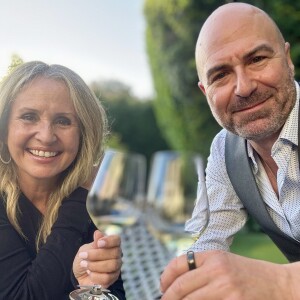
Every year we face the stresses of annual appointments and assessments. Today we talk about game plans and strategies to help prepare for them.
Episode Transcript: https://ifweknewthen701833686.wordpress.com/2025/05/26/188-preparing-for-annual-appointments/2/
Please follow us on Twitter @ifweknewthenPOD you can drop us a line on our Facebook page @ifweknewthenPOD or visit our website https://www.IfWeKnewThen.com to send us an email with questions and comments. You can join our mailing list there and get alerts of future podcast episodes. Thank you again and we look forward to you joining us on the next episode of IF WE KNEW THEN.
May 11, 2025
May 11, 2025
20 min
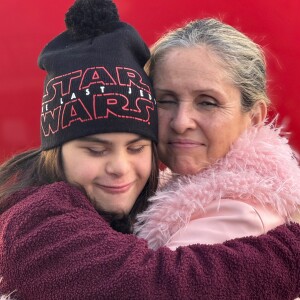
Happy Mother’s Day to all the mothers in this beautiful Down syndrome community. You are a force and we thank and celebrate you.
Episode Transcript: https://ifweknewthen701833686.wordpress.com/2025/05/11/187-happy-mothers-day/2/
Please follow us on Twitter @ifweknewthenPOD you can drop us a line on our Facebook page @ifweknewthenPOD or visit our website https://www.IfWeKnewThen.com to send us an email with questions and comments. You can join our mailing list there and get alerts of future podcast episodes. Thank you again and we look forward to you joining us on the next episode of IF WE KNEW THEN.
May 4, 2025
May 4, 2025
40 min
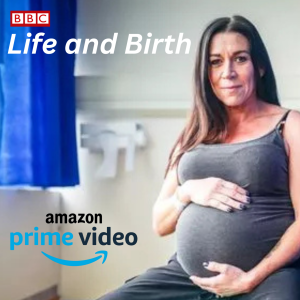
This week we are revisiting our interview with Melissa Kynoch, known by many for being featured on the BBC documentary LIFE AND BIRTH. Millions of people have had a chance to watch her positive attitude in the face of her son Bertie's Down syndrome diagnosis. Now, five years later, the docu-series is available in the United States on Amazon Prime.
Season 1, Episode 6: https://www.amazon.com/gp/video/detail/B09LCDLPFV/ref=atv_dp_share_cu_r
Episode Transcript: https://ifweknewthen701833686.wordpress.com/2025/05/04/186-life-and-birth-on-amazon-prime-with-melissa-kynoch/2/
Please follow us on Twitter @ifweknewthenPOD you can drop us a line on our Facebook page @ifweknewthenPOD or visit our website https://www.IfWeKnewThen.com to send us an email with questions and comments. You can join our mailing list there and get alerts of future podcast episodes. Thank you again and we look forward to you joining us on the next episode of IF WE KNEW THEN.
Apr 27, 2025
Apr 27, 2025
48 min
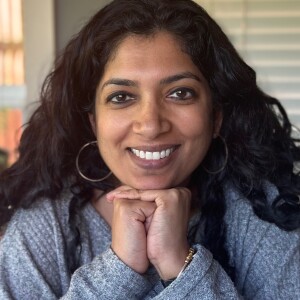
In this episode we discuss the need and power for us to cultivate self pride and worth within the disability community. In doing so, we nullify the damaging words and opinions of those who wish to label and minimize individuals with disabilities or anyone for that matter.
Episode Transcript:
Please follow us on Twitter @ifweknewthenPOD you can drop us a line on our Facebook page @ifweknewthenPOD or visit our website https://www.IfWeKnewThen.com to send us an email with questions and comments. You can join our mailing list there and get alerts of future podcast episodes. Thank you again and we look forward to you joining us on the next episode of IF WE KNEW THEN.

Thank you for listening!
We are so happy that we can connect with people from all over the world and we appreciate you. If you would be so kind to rate, subscribe and comment where ever you listen to podcasts, it would help us reach an even larger audience.
All the best to you and please stay in touch. Stephen and Lori Saux